大衛(wèi)·威斯納作品推薦--
Tuesday《瘋狂星期二》(1992年凱迪克金獎(jiǎng),平裝)
Tuesday 瘋狂星期二(精裝)(1992年凱迪克金獎(jiǎng))
Sector7 《7號(hào)夢(mèng)工廠》精裝 (2000年凱迪克銀獎(jiǎng))
Hurricane暴風(fēng)雨(精裝)
HurricaneBook & CD 暴風(fēng)雨(附CD)
Hurricane暴風(fēng)雨(平裝)
TheLoathsome Dragon 討厭的龍 (大衛(wèi)-威斯納繪本)
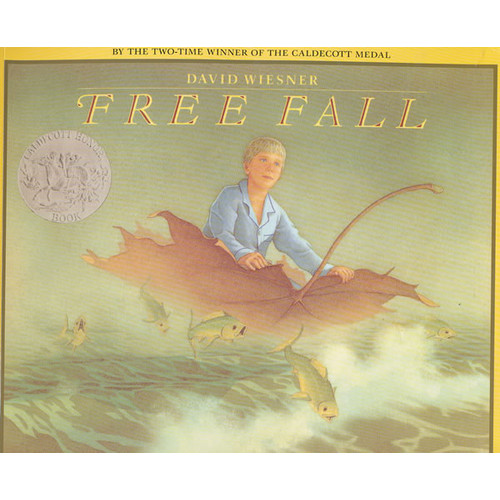
FreeFall [Hardcover]夢(mèng)幻大飛行(凱迪克銀獎(jiǎng),精裝)
FreeFall [Paperback]夢(mèng)幻大飛行(1989年凱迪克銀獎(jiǎng),平裝)
TheLion, the Witch and the Wardrobe[Hardcover]納尼亞傳奇:獅子、女巫與魔衣櫥(大衛(wèi)·威斯納插圖版,精裝)
Art& Max 藝術(shù)大魔法
TheThree Pigs 三只豬(凱迪克金獎(jiǎng),平裝)
TheThree Pigs(Caldecott Medal Book) 《三只小豬》(凱迪克金獎(jiǎng)繪本,精裝)
"Grade 2-5 In an odd wordless picture book about a dream, a fair-haired boy falls asleep while reading an ominous looking atlas. As he floats through sky and slumber, the boy's green checked bedspread is transformed into an aerial view of the earth. He then descends upon an enormous chess board complete with mortal playing pieces. This medieval welcoming party leads the youngster to their mazed castle where he continues his search (although this is not always clear) for an elusive map. The nameless protagonist's ensuing adventures are confusing, complicated, and illogical. Transformations abound in this surrealistic universe. Floating leaves change into swans, fortress walls become dragons, building fronts turn into mountains. The influence of such literary classics as Gulliver's Travels, The Wizard of Oz, and The Water-Babies, along with the artistry of Raphael, Escher, and Sendak, is apparent. Soft shades of green, blue, and yellow dominate the action. Technical virtuosity is the trademark of the double-page watercolor spreads. Especially notable is the solidity of forms and architectural details. While many of the illustrations are stunning, if somewhat slick, they work better as individual pieces than as a whole. This book lacks the sequence and logic required by young children, and it will have limited appeal among older children." "Grade 2-5 In an odd wordless picture book about a dream, a --School Library Journal
--School Library Journal "Grade 2-5 In an odd wordless picture book about a dream, afair-haired boy falls asleep while reading an ominous lookingatlas. As he floats through sky and slumber, the boy's greenchecked bedspread is transformed into an aerial view of the earth.He then descends upon an enormous chess board complete with mortalplaying pieces. This medieval welcoming party leads the youngsterto their mazed castle where he continues his search (although thisis not always clear) for an elusive map. The nameless protagonist'sensuing adventures are confusing, complicated, and illogical.Transformations abound in this surrealistic universe. Floatingleaves change into swans, fortress walls become dragons, buildingfronts turn into mountains. The influence of such literary classicsas Gulliver's Travels, The Wizard of Oz, and The Water-Babies,along with the artistry of Raphael, Escher, and Sendak, isapparent. Soft shades of green, blue, and yellow dominate theaction. Technical virtuosity is the trademark of the double-pagewatercolor spreads. Especially notable is the solidity of forms andarchitectural details. While many of the illustrations arestunning, if somewhat slick, they work better as individual piecesthan as a whole. This book lacks the sequence and logic required byyoung children, and it will have limited appeal among olderchildren."
--School Library Journal
fair-haired boy falls asleep while reading an ominous looking
atlas. As he floats through sky and slumber, the boy's green
checked bedspread is transformed into an aerial view of the earth.
He then descends upon an enormous chess board complete with mortal
playing pieces. This medieval welcoming party leads the youngster
to their mazed castle where he continues his search (although this
is not always clear) for an elusive map. The nameless protagonist's
ensuing adventures are confusing, complicated, and illogical.
Transformations abound in this surrealistic universe. Floating
leaves change into swans, fortress walls become dragons, building
fronts turn into mountains. The influence of such literary classics
as Gulliver's Travels, The Wizard of Oz, and The Water-Babies,
along with the artistry of Raphael, Escher, and Sendak, is
apparent. Soft shades of green, blue, and yellow dominate the
action. Technical virtuosity is the trademark of the double-page
watercolor spreads. Especially notable is the solidity of forms and
architectural details. While many of the illustrations are
stunning, if somewhat slick, they work better as individual pieces
than as a whole. This book lacks the sequence and logic required by
young children, and it will have limited appeal among older
children."