Warning: count(): Parameter must be an array or an object that implements Countable in C:\web\huiben\book_details.php on line 531
Warning: Illegal string offset 'title' in C:\web\huiben\book_details.php on line 532
、
Warning: count(): Parameter must be an array or an object that implements Countable in C:\web\huiben\book_details.php on line 531
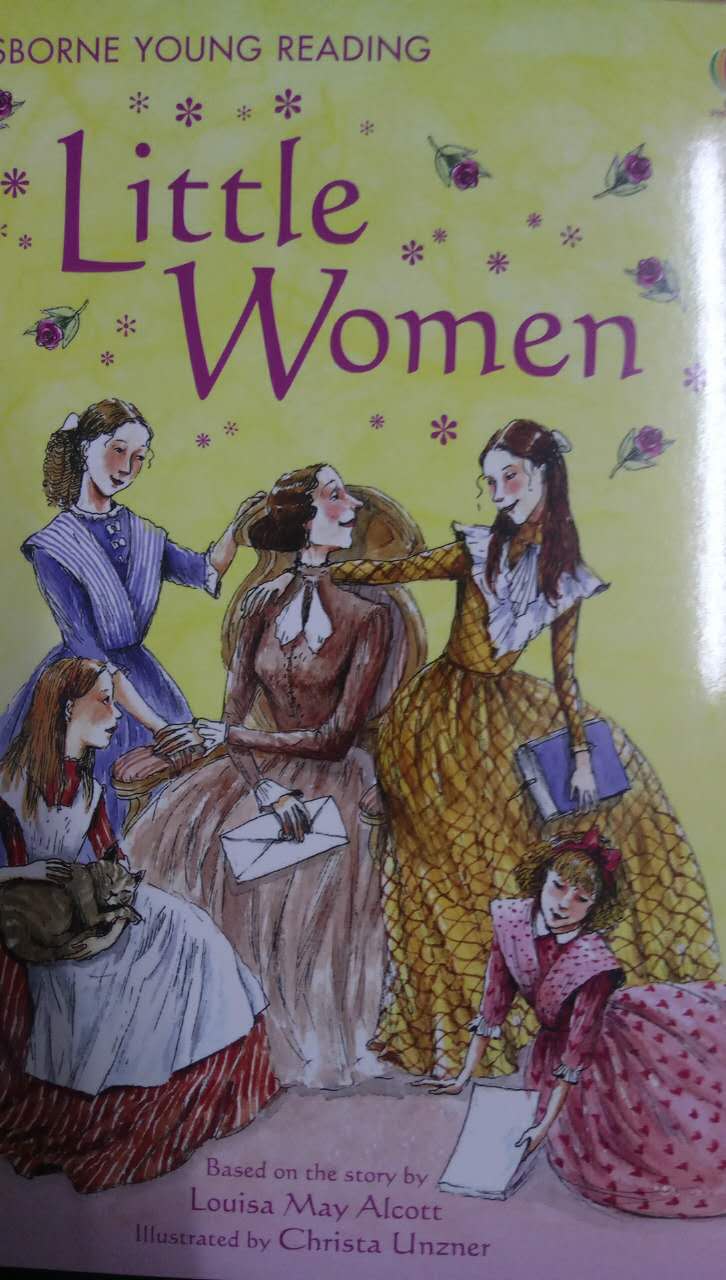
Little Women is a novel by American author Louisa May Alcott, which wasoriginally published in two volumes. Alcott wrote the books rapidly over severalmonths at the request of her publisher. The novel follows the lives of four sisters—Meg, Jo,Beth, and Amy March—detailing their passage from childhood to womanhood, and is looselybased on the author and her three sisters. It is an outstanding achievement ofnineteenth-century American literature, and the first children's novel writtenin the United States to have become an enduring classic.
The book has been adapted for film twice as silent films, and fourtimes with sound, in 1933, 1949, 1978 and 1994. Four television series weremade, including two in Britain in the 1950s and two anime series in Japan inthe 1980s. A musical version opened on Broadway in 2005. An American operaversion in 1998 has been performed internationally and filmed for broadcast onUS television in 2001.
美國作家路易莎·奧爾科特的代表作《小婦人》,一部美國文學的經典著作,一本道德家世小說。馬奇家四姐妹對自立的權力的追求,以及她們對家庭的忠誠眷顧構成了全書一貫的矛盾,使故事熠熠生輝,情節生動感人。《小婦人》出版后獲得了巨大成功,成為公認的美國名著,100多年來一直受到讀者熱烈歡迎。被美國圖書協會、美國教育協會兩會代表選入100種小學生的必備書,其中又精選出25種,《小婦人》列居榜首,世界上已有數十種不同語言的譯本,30年代此書已風靡中國大陸。
本書為英文原版,同時隨書附贈配套朗讀CD,讓讀者在閱讀精彩故事的同時,亦能提升英文閱讀水平。
“Christmas won’t beChristmas without any presents,” grumbled Jo, lying on the rug.
“It’s so dreadful tobe poor!” sighed Meg, looking down at her old dress.
“I don’t think it’sfair for some girls to have plenty of pretty things, and other girls nothing atall,” added little Amy, with an injured sniff.
“We’ve got Father andMother, and each other,” said Beth contentedly from her corner.
The four young faceson which the firelight shone brightened at the cheerful words, but darkenedagain as Jo said sadly, “We haven’t got Father, and shall not have him for along time.” She didn’t say “perhaps never,” but each silently added it,thinking of Father far away, where the fighting was.
Nobody spoke for aminute; then Meg said in an altered tone, “You know the reason Mother proposednot having any presents this Christmas was because it is going to be a hardwinter for everyone; and she thinks we ought not to spend money for pleasure,when our men are suffering so in the army. We can’t do much, but we can makeour little sacrifices, and ought to do it gladly. But I am afraid I don’t,” andMeg shook her head, as she thought regretfully of all the pretty things shewanted.
“But I don’t think thelittle we should spend would do any good. We’ve each got a dollar, and the armywouldn’t be much helped by our giving that. I agree not to expect anything fromMother or you, but I do want to buy Undine and Sintram for myself. I’ve wantedit so long,” said Jo, who was a bookworm.
“I planned to spendmine in new music,” said Beth, with a little sigh, which no one heard but thehearth brush and kettle-holder.
“I shall get a nicebox of Faber’s drawing pencils; I really need them,” said Amy decidedly.
“Mother didn’t sayanything about our money, and she won’t wish us to give up everything. Let’seach buy what we want, and have a little fun; I’m sure we work hard enough toearn it,” cried Jo, examining the heels of her shoes in a gentlemanly manner.
“I know I do—teachingthose tiresome children nearly all day, when I’m longing to enjoy myself athome,” began Meg, in the complaining tone again.
“You don’t have halfsuch a hard time as I do,” said Jo. “How would you like to be shut up for hourswith a nervous, fussy old lady, who keeps you trotting, is never satisfied, andworries you till you’re ready to fly out the window or cry?”
“It’s naughty tofret,—but I do think washing dishes and keeping things tidy is the worst workin the world. It makes me cross, and my hands get so stiff, I can’t practicewell at all.” And Beth looked at her rough hands with a sigh that any one couldhear that time.
“I don’t believe anyof you suffer as I do,” cried Amy, “for you don’t have to go to school withimpertinent girls, who plague you if you don’t know your lessons, and laugh atyour dresses, and label your father if he isn’t rich, and insult you when yournose isn’t nice.”
“If you mean libel,I’d say so, and not talk about labels, as if Papa was a pickle bottle,”advised Jo, laughing.
“I know what I mean,and you needn’t be ‘statirical’ about it. It’s proper to use good words, andimprove your vocabilary,” returned Amy, with dignity.
“Don’t peck at one another,children. Don’t you wish we had the money Papa lost when we were little, Jo?Dear me! How happy and good we’d be, if we had no worries!” said Meg, who couldremember better times.
“You said the otherday you thought we were a deal happier than the King children, for they werefighting and fretting all the time, in spite of their money.”
“So I did, Beth. Well,I think we are. For though we do have to work, we make fun for ourselves, andare a pretty jolly set, as Jo would say.”
“Jo does use suchslang words!” observed Amy, with a reproving look at the long figure stretchedon the rug. Jo immediately sat up, put her hands in her pockets, and began towhistle.
“Don’t, Jo; It’s soboyish!”
“That’s why I do it.”
“I detest rude,unlady-like girls!”
“I hate affected,niminy-piminy chits!”
“Birds in their littlenests agree,” sang Beth, the peace-maker, with such a funny face that bothsharp voices softened to a laugh, and the “pecking” ended for that time.
“Really, girls, youare both to be blamed,” said Meg, beginning to lecture in her elder-sisterlyfashion. “You are old enough to leave off boyish tricks, and to behave better,Josephine. It didn’t matter so much when you were a little girl, but now youare so tall, and turn up your hair, you should remember that you are a younglady.”